Building a Morning Pause Before the Day Starts
Ten minutes between waking and deciding.
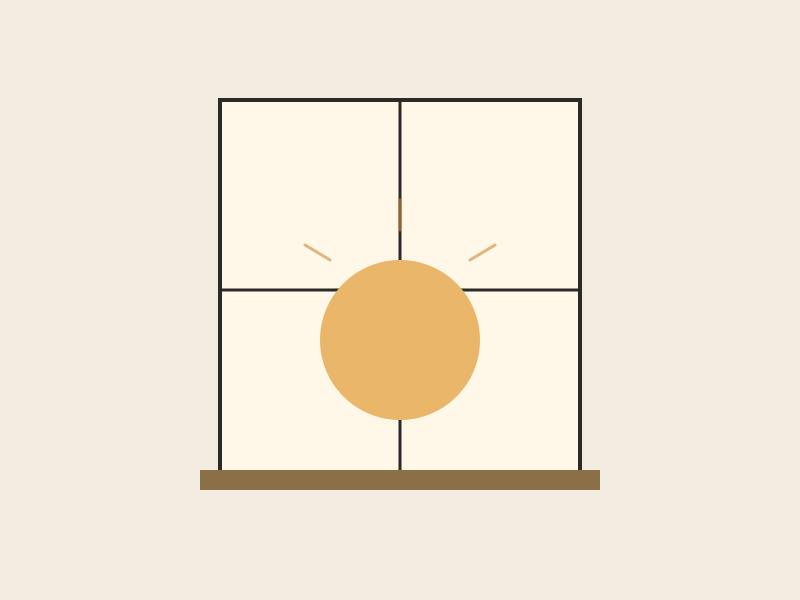
Between the alarm and the first real decision of the day there is usually a single beat: the moment you reach for the phone and the day begins being made by someone other than you. A morning pause widens that beat to ten minutes, and does nothing in it. No email, no news, no inbox, no calendar, no triage. A deliberate, boring stretch of time before the day is permitted to arrive.
It is not a morning routine. A morning routine is a sequence. The pause is the stillness the sequence has to clear a space for. Coffee, exercise, shower, and reading can still happen later in the same hour. The pause comes first, or it does not come at all.
Why the first ten minutes matter
A nervous system picks up its emotional pace from the first few signals it receives after waking. If the first signal is a news alert, a work message, or a social feed, the tempo of the day is set by an outside source before you've had a cup of water. The rest of the morning is then spent trying to get back ahead of a pace that was never yours to begin with.
The pause lets the internal tempo set first. You are not meditating, unless you already do. You are not affirming, unless that is a practice you have. You are simply refusing, for ten minutes, to hand the morning over.
What to do in the pause
A short list, any of which will do:
- Sit by a window. Look out of it.
- Make and drink a first glass of water slowly.
- Stretch two or three times without a program.
- Sit in a chair and notice the room waking up around you.
- If you need to do something with your hands, fold a laundry basket or tidy a single surface.
Don't read during the pause, even something printed. Reading is a lovely ritual, but it isn't this one. Reading carries the mind forward into a narrative. The pause is for the opposite. It is for letting the day accumulate shape before being given a direction.
Ten minutes that are not claimed by anyone, so that the rest of the morning can be.
The phone rule
The phone stays face down, or better, in another room, for the duration. This is the only hard rule. If your phone is your alarm clock, buy a two-dollar alarm clock. The battery you are saving here is not the phone's. It is yours. A single glance in the first ten minutes resets the whole thing, because the messages and news you happen to see become the furniture of the pause, and the pause turns into a triage meeting with one attendee.
What the pause changes
Two things, reliably.
First, the first conversation of the day is better. Whether it is with a partner, a child, a housemate, or a colleague on a morning call, you arrive at it without having absorbed ten small doses of someone else's urgency. You listen more. You say less. Both are improvements.
Second, the first real task of the day is chosen by you instead of assigned to you. An inbox opened at 6:55 determines the first task of the day by whoever emailed you at 5:18. An inbox opened at 7:10, after a pause, finds the same email in a different posture. You can still respond. You will respond differently.
If ten minutes is too long
Start with three. The principle scales. Three minutes of morning pause is measurably better than zero, and the jump from zero to three is the harder of the two. Going from three to ten is mostly a matter of protecting a few additional minutes in the same way.
If you share a household with small children, the pause has to be negotiated. It can be done before anyone else wakes up (fifteen minutes earlier than the earliest riser is usually enough), or in a stolen bathroom break, or in the car, parked, before the day begins. The specific ten minutes don't matter. Any ten minutes, held honestly, will do.
Beginning tomorrow
Tonight, before sleep, decide where your morning pause will happen. Pick a chair. Pick a window. Pick a mug. Leave them ready. When the alarm goes in the morning, go directly to the chosen place. Don't pick up the phone. Stay there for ten minutes.
On the first day, it will feel like nothing is happening. That is because nothing is. Which is the point.